
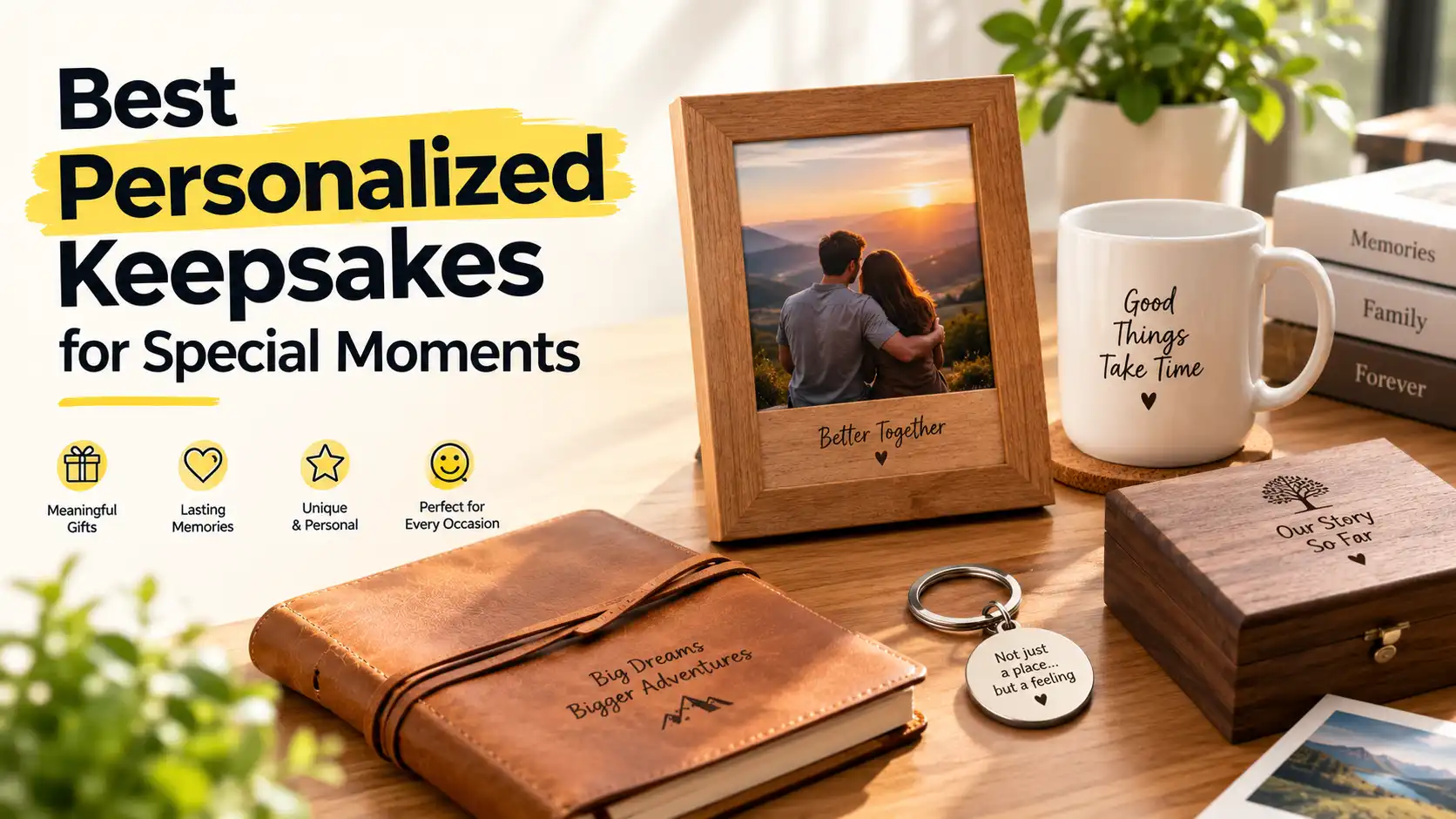
The best personalized keepsakes do more than display a name or date. They preserve something specific about an experience, such as photographs, handwriting, locations, colors, meaningful phrases, or small pieces of memorabilia.
A good keepsake should also be designed for the way it will actually be stored or displayed. Some work best on a bookshelf, while others belong in a frame, memory box, or permanent display. Choosing the right format makes the finished piece more personal and more likely to be kept for years.
1. Create a Custom Photo Book
Photo books work well for events that produce dozens or hundreds of photographs. Instead of leaving images scattered across phones and cloud folders, they can be organized into one chronological or themed record.
Options such as Mixbook photo books allow photographs to be arranged with captions, dates, backgrounds, and other design elements. This makes the format useful for weddings, anniversaries, graduations, family trips, milestone birthdays, and a baby’s first year.
Start by selecting the strongest images rather than trying to include everything.
Build the Book Around a Simple Structure
- Opening page with the occasion and date
- Early preparation or arrival photos
- Main event photographs
- Smaller candid moments
- Group or family pictures
- Final page with a short message
Keep layouts consistent. Too many fonts, decorative elements, or competing colors can make photographs feel less important.
2. Turn Handwriting Into a Framed Keepsake
Handwriting often carries more emotional value than professionally designed typography.
A handwritten recipe, note from a grandparent, childhood message, signature, or short letter can be scanned and preserved as framed artwork.
Use the highest-quality original available. Scan paper at a sufficient resolution to retain pen texture, faded lines, and small imperfections.
Avoid excessive digital cleanup. Minor marks and uneven lettering are often part of what makes the original meaningful.
For fragile documents, keep the original stored safely and display a high-quality reproduction instead.
3. Make a Memory Box for Physical Mementos
Not every memory can be represented by a photograph.
A memory box gives small physical objects a permanent place instead of leaving them scattered in drawers.
Travel tickets, event wristbands, pressed flowers, invitations, handwritten notes, medals, postcards, and small souvenirs can all work well.
Organize items around one occasion or period rather than mixing unrelated memories together.
A wedding box, for example, might contain an invitation, dried flowers, a copy of the vows, reception stationery, and several printed photographs.
4. Design a Personalized Embroidered Patch
Patches can turn a simple illustration, date, symbol, location, or phrase into a compact textile keepsake.
A printed embroidery patch is particularly useful when the design contains details or colors that would be difficult to reproduce using traditional embroidery alone.
For keepsake projects, the patch does not have to be attached to clothing.
It can be placed inside a shadow box, mounted on a fabric-covered memory board, incorporated into framed textile art, or displayed alongside photographs and tickets from the same occasion.
A custom patch can represent a family reunion, club event, road trip, graduation year, wedding location, or another milestone with a recognizable symbol.
5. Preserve a Special Location With Custom Map Art
Some memories are strongly connected to a place.
A custom map can mark where a couple first met, where a family lived, the destination of an important trip, or the location of a wedding.
Keep the design simple enough that the location remains the focus.
Include coordinates, a street name, date, or short line of text if it adds useful context.
For a series of trips, several small maps can be combined into one larger display instead of creating an individual piece for every destination.
6. Create a Keepsake From a Meaningful Recipe
Family recipes work especially well as personalized gifts because they preserve both food and family history.
Instead of simply retyping the recipe, consider preserving the original handwriting.
A scanned recipe card can be printed as wall art, incorporated into a cookbook, or paired with a photograph of the person associated with the dish.
Useful Details to Include
- Original handwritten recipe
- Name of the person who made it
- Approximate year or family generation
- Photograph of the finished dish
- Short story connected to the recipe
- Notes about family traditions
These details turn a basic cooking instruction into a record of family history.
7. Build a Travel Keepsake Collection
Travel memories are often spread across photographs, boarding passes, maps, receipts, and small souvenirs.
Instead of storing everything separately, build a consistent collection.
Choose one format for every major trip. That could be a photo book, framed map, small memory box, or printed travel journal.
Consistency makes the collection easier to display and prevents souvenirs from becoming clutter.
For digital photographs, add captions while details are still fresh. City names, restaurants, dates, and small stories become surprisingly difficult to remember several years later.
8. Preserve Children’s Artwork Properly
Children’s drawings are meaningful, but keeping every sheet of paper becomes impractical.
Photograph or scan selected artwork throughout the year.
The digital files can then be turned into an annual book, calendar, framed collage, or printed portfolio.
Save important metadata with each image.
Record the child’s age, date, and any explanation they gave about the drawing. A picture that looks abstract years later may have originally represented a very specific family moment.
Keep a small number of originals and digitally preserve the rest.
9. Create a Milestone Time Capsule
A time capsule creates a keepsake intended to become more meaningful later.
It works especially well for milestone birthdays, weddings, graduations, births, and anniversaries.
Include materials that capture the current moment rather than objects that are simply expensive.
Letters, photographs, newspaper clippings, predictions, small personal items, playlists, and printed screenshots can provide a surprisingly detailed picture of a particular year.
Set a specific opening date and label the container clearly.
Digital files should also be stored in a format that can be transferred as technology changes.
10. Record Voices Alongside Physical Keepsakes
Audio can preserve details that photographs cannot.
Record parents, grandparents, children, or friends telling a story connected to the occasion.
Store the recording digitally and create a physical reference to it, such as a QR code inside a photo book or memory box.
Use common file formats and maintain more than one backup.
A short recording of someone’s voice explaining a family story can eventually become one of the most valuable parts of the collection.
Choose Materials That Will Last
Personalization matters, but construction quality matters too.
Printed photographs should use appropriate paper and inks. Framed pieces should be protected from excess moisture and direct sunlight. Important papers should be stored in acid-free materials where practical.
Digital files also need maintenance.
Keep original photographs and scans at full resolution, store backups in more than one location, and avoid relying on a single phone or social media account as the permanent archive.
Make the Keepsake Specific to the Moment
The strongest personalized keepsakes are specific rather than generic.
A date, handwritten note, exact location, photograph, family phrase, or meaningful symbol can make a simple object much more significant.
Choose the format based on what you are trying to preserve. Use photo books for visual stories, shadow boxes for physical objects, embroidered designs for symbolic memories, and audio for voices and stories.
The goal is not to create the most elaborate gift. It is to preserve enough detail that the person looking at it years later can immediately remember why that moment mattered.